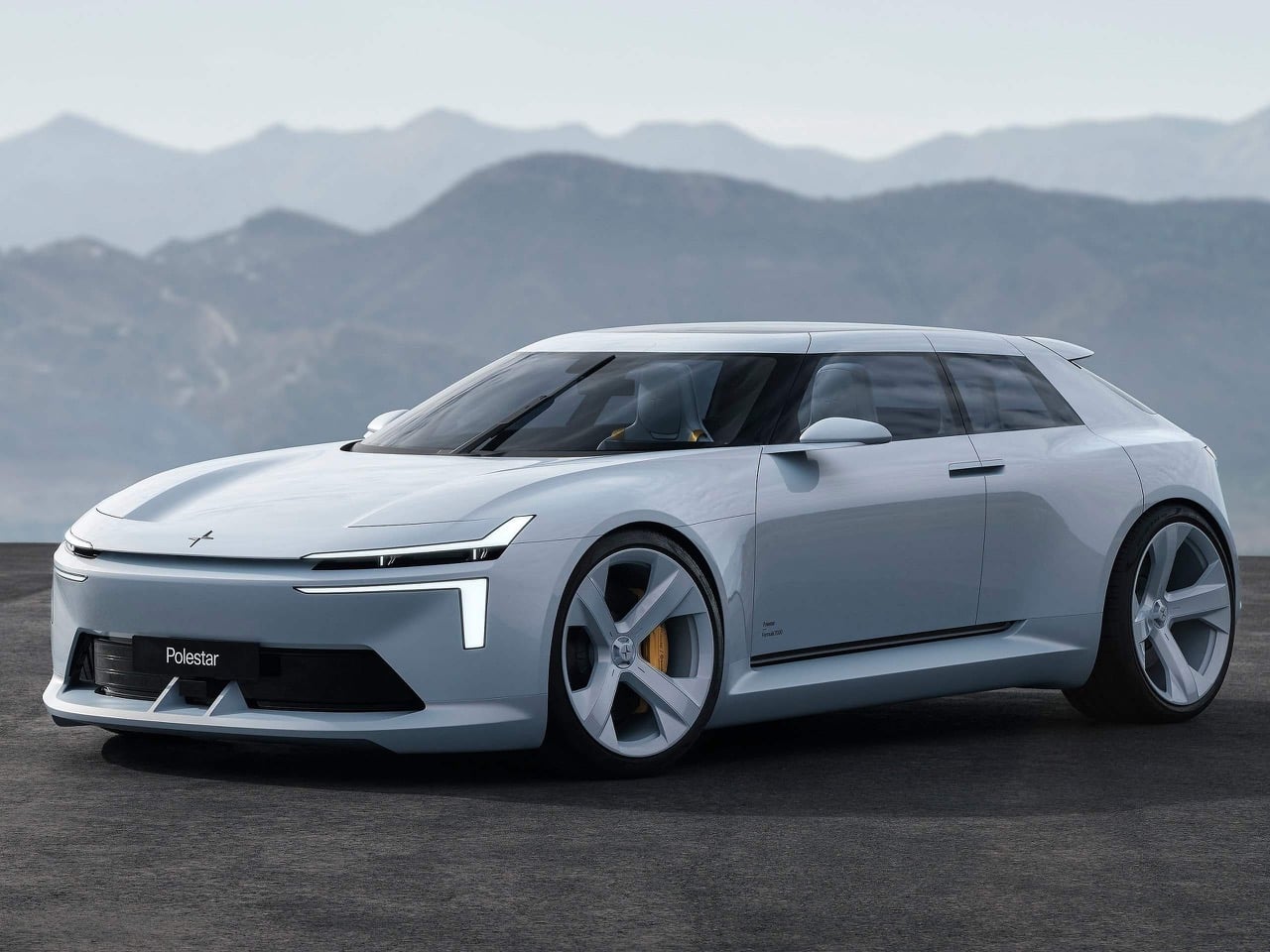
Polestar has a habit of turning its concept cars into real cars, which makes its show cars worth a closer look. The Precept, a sleek four-door GT revealed online in 2020 after the Geneva Motor Show was canceled, grew up into the Polestar 5. Nahum Escobedo, the designer who gave the Precept its shark-and-airplane lines, now runs exterior design for the whole brand. So when Polestar shows a new concept and says pieces of it are headed for showrooms, I believe them. Meet the Formula 2030, a low-slung four-door sports car that previews the next Polestar 2 and the upcoming Polestar 7.
The Formula 2030 is also the first show car from head of design Philipp Römers, who came over from Audi in 2024. It sits just 53 inches tall, lower than the Polestar 5. It wears a new color Polestar calls Nitrogen that shifts with natural light, plus Swedish Gold on everything from the Brembo calipers to the seatbelts. Inside, Polestar brings back eight physical controls, and you can swap each one between a rocker switch and a rotary knob. One catch for US readers: Polestar is barred from selling new models here starting with model year 2027, so you’ll be enjoying this future from a distance.
Designer: Polestar
Lower Than a Model 3, Shaped Like a Coupe
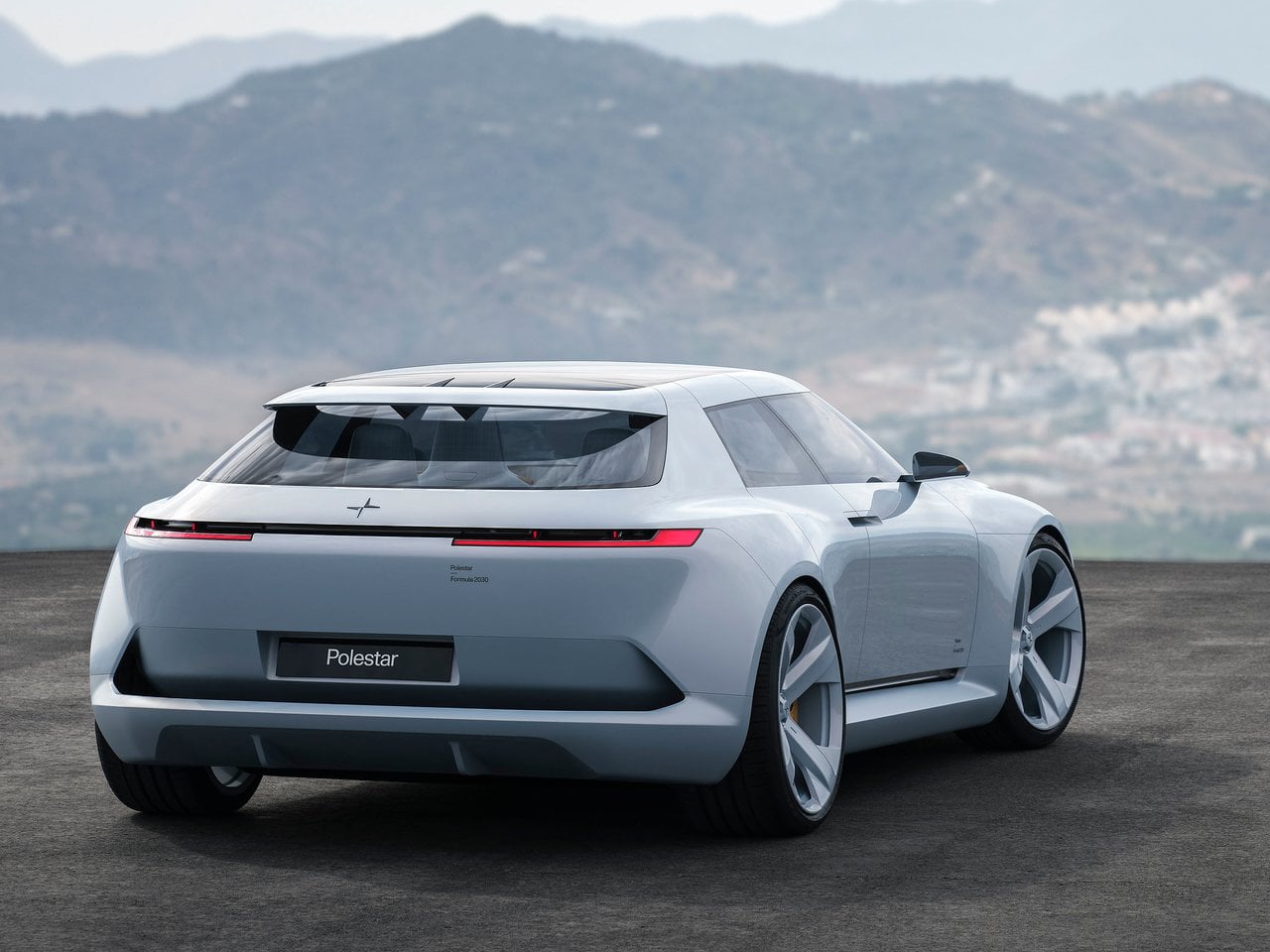
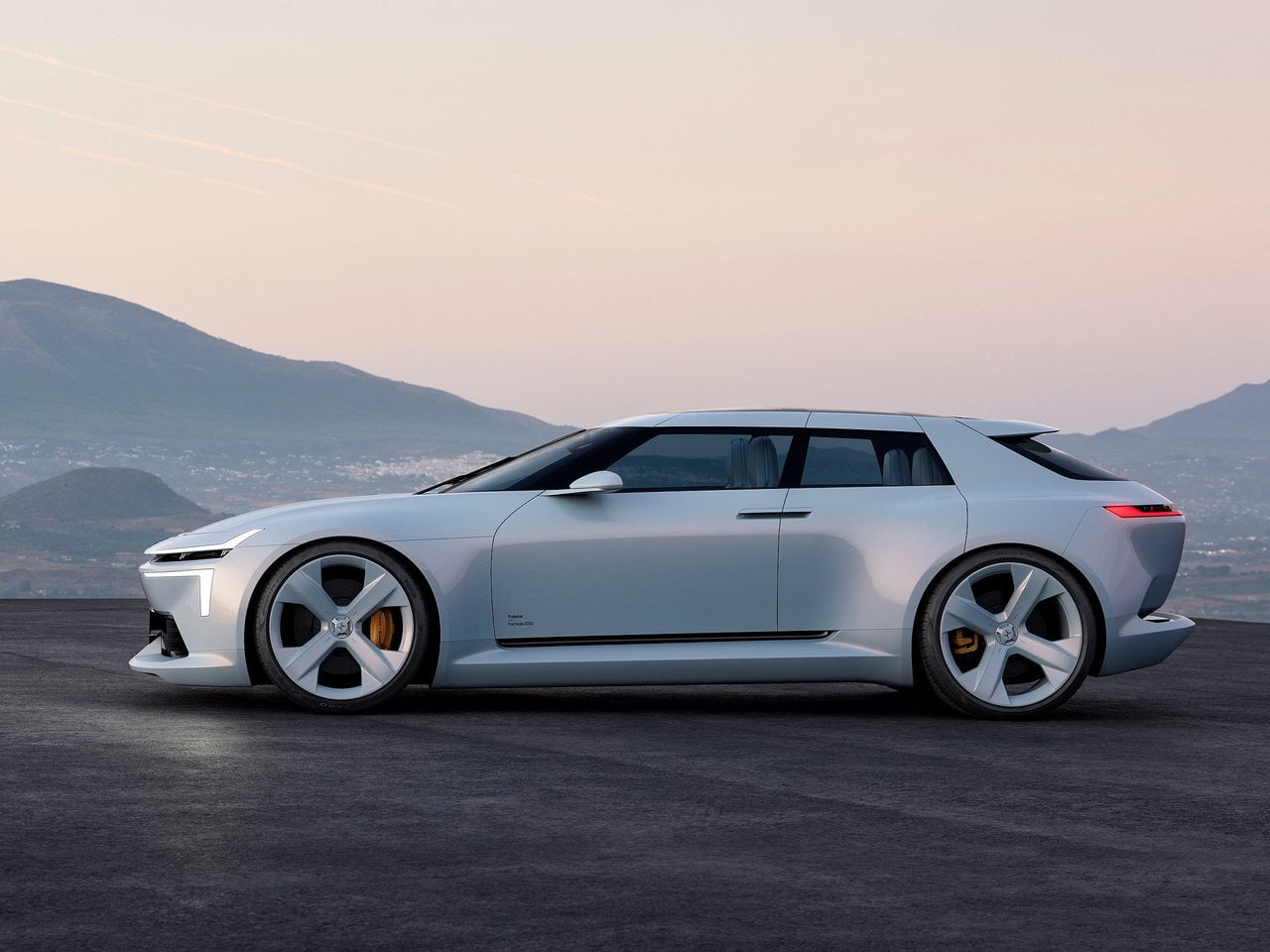
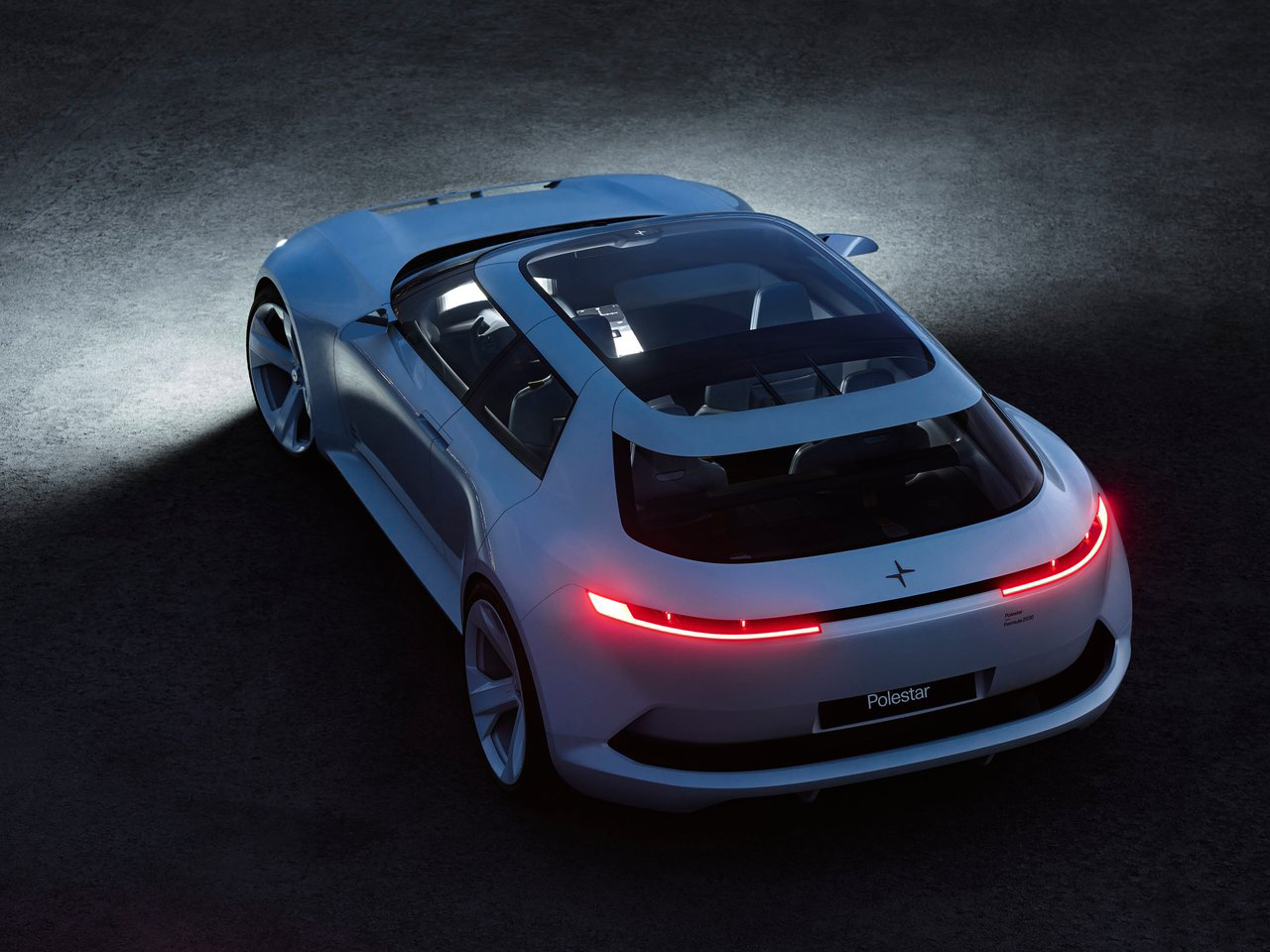
Polestar lists the Formula 2030 at 184.3 inches long, 79.6 inches wide, and 53 inches tall (4,680 x 2,021 x 1,350 mm), riding on a 109.4-inch (2,780 mm) wheelbase. That makes it slightly shorter than a Tesla Model 3 and about 3.5 inches lower. The cabin sits pushed back over fat rear haunches, with a long hood and short overhangs, a cab-rearward recipe usually reserved for two-door coupes. From above, Polestar describes coke-bottle hips with the visual weight piled onto the rear wheels. The brand says the car lands somewhere between the next Polestar 2 and the Polestar 7 in size, so think of it as the family sketchbook in physical form.
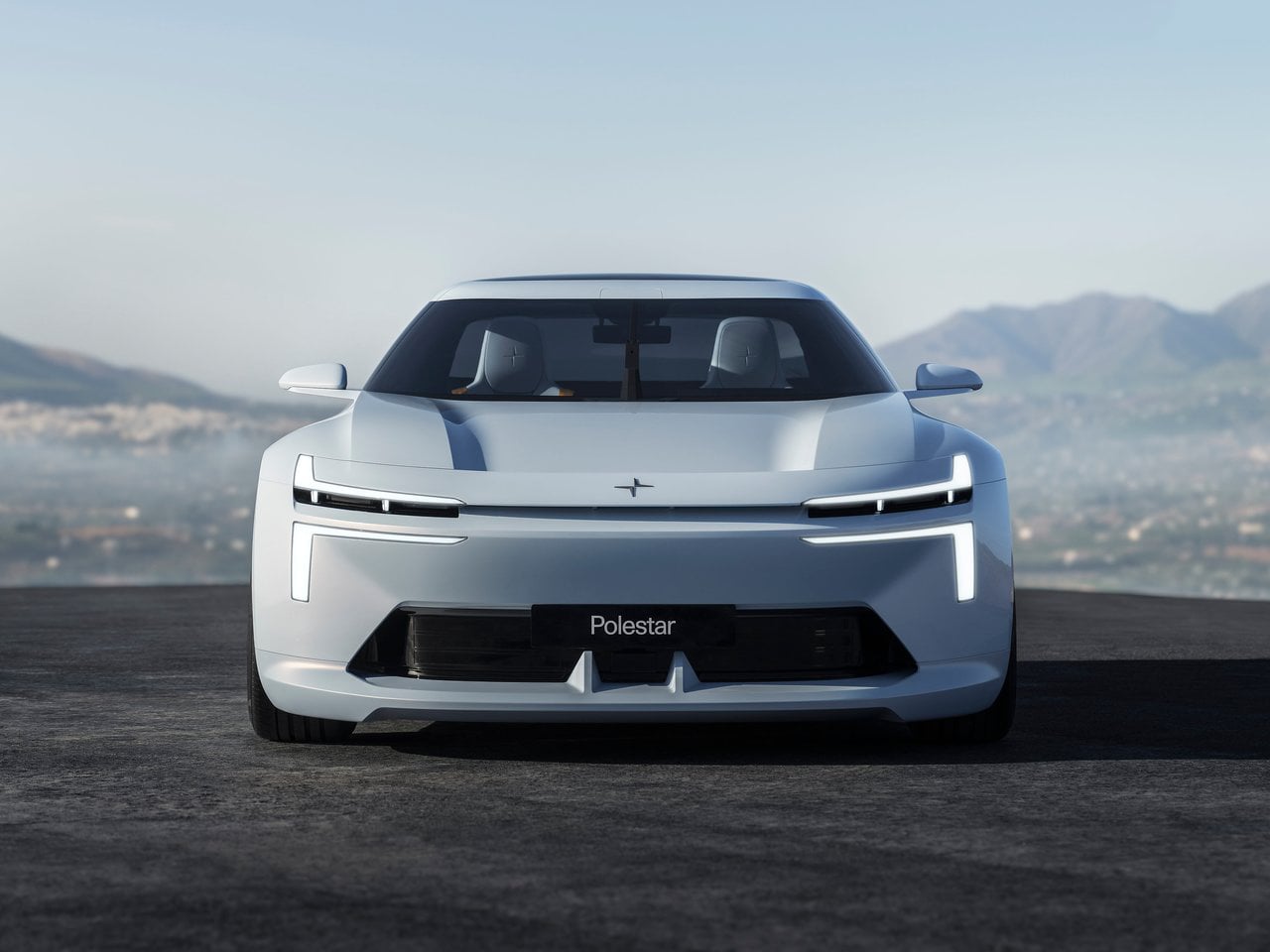
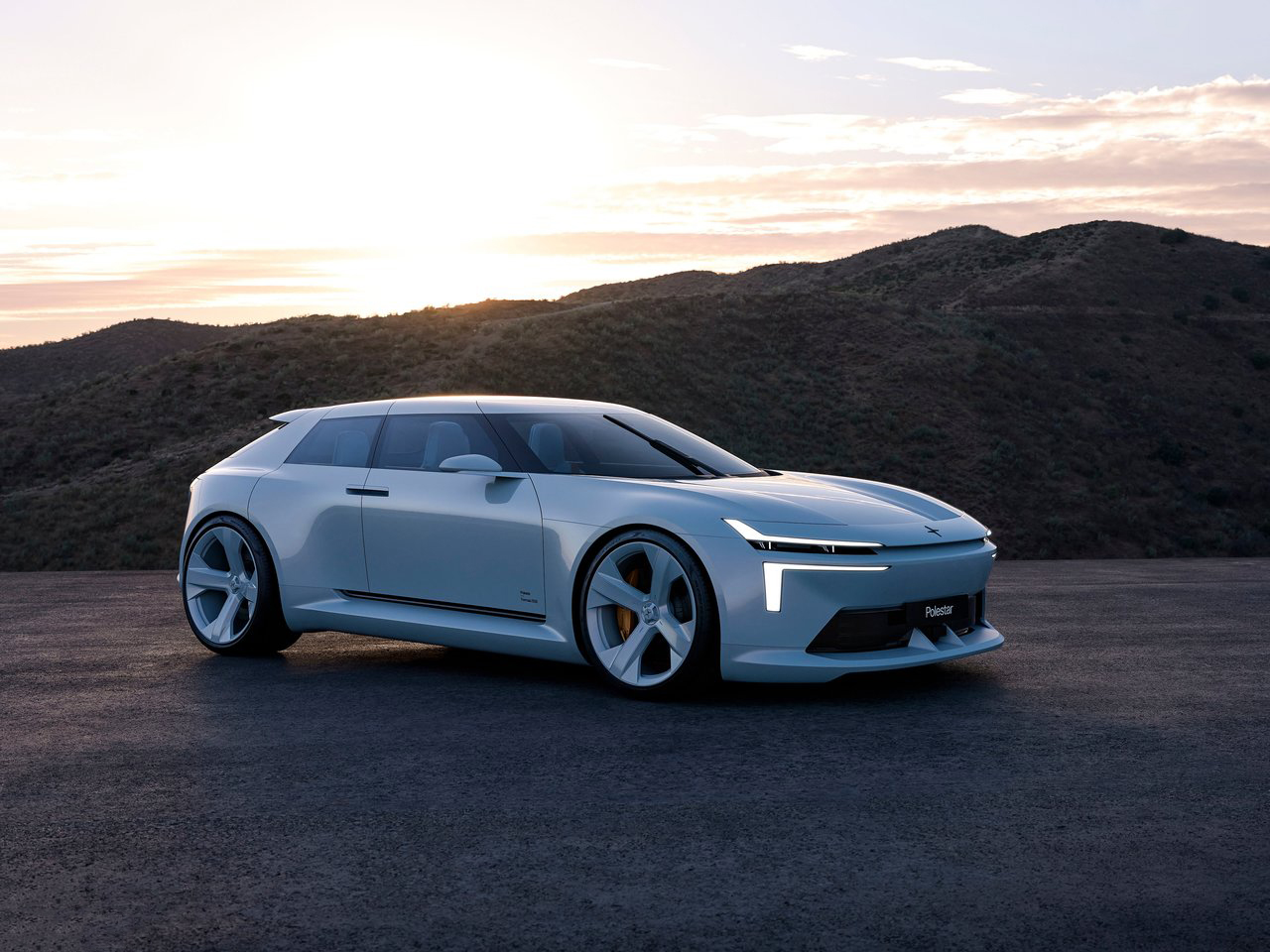
Up front, the Dual Blade headlights borrow from the Polestar 3 and get tucked into a front aero wing above a shark nose and a deep splitter. A central spine anchors that splitter to the body and runs up the hood to a single, vertically mounted windshield wiper, a motorsport trick that looks fantastic even parked. The wraparound, visor-style windscreen is a deliberate nod to the original Polestar 2. My favorite detail is the LiDAR, which hides under an aero shroud and only pops up when the car is driving itself. After years of roof-mounted sensor humps on cars like Volvo’s EX90, a sensor that knows when to disappear feels like good manners.
The Light Bar Is Dead, and the Trunk Has Nothing to Hide
Around back, Polestar drops the full-width light bar found on nearly every EV and replaces it with Single Blade taillights, which the brand says are arriving ahead of series production. The lights trace a graphic that angles down toward the road, evolving the sharp geometric shapes Polestar has used before. Polestar itself calls the rear UFO-esque, and the glass backs that up by wrapping into the shallow side windows, broken only by a chunky C-pillar. A wing sits centrally on illuminated mounts, with a diffuser below doing the aero work. Escobedo says the goal was to keep the brand instantly recognizable while challenging expectations, and the taillights are where that tension shows most.
The rear doors hinge at the back and there’s no B-pillar, so opening both sides exposes the entire cabin and its four individual seats, a trick the Precept also pulled. Pop the rear clamshell and you find a transparent trunk floor, with custom Polestar bags strapped underneath by gold luggage straps. It’s luggage displayed like a museum exhibit, which I find both ridiculous and delightful. The race-inspired Öhlins dampers are on show back there too. Up front, the frunk is fitted for two racing helmets and a fire extinguisher, framed by a gold strut brace, which pretty much spells out Polestar’s idea of a good weekend.
Eight Buttons and a Cabin That Moves Around You
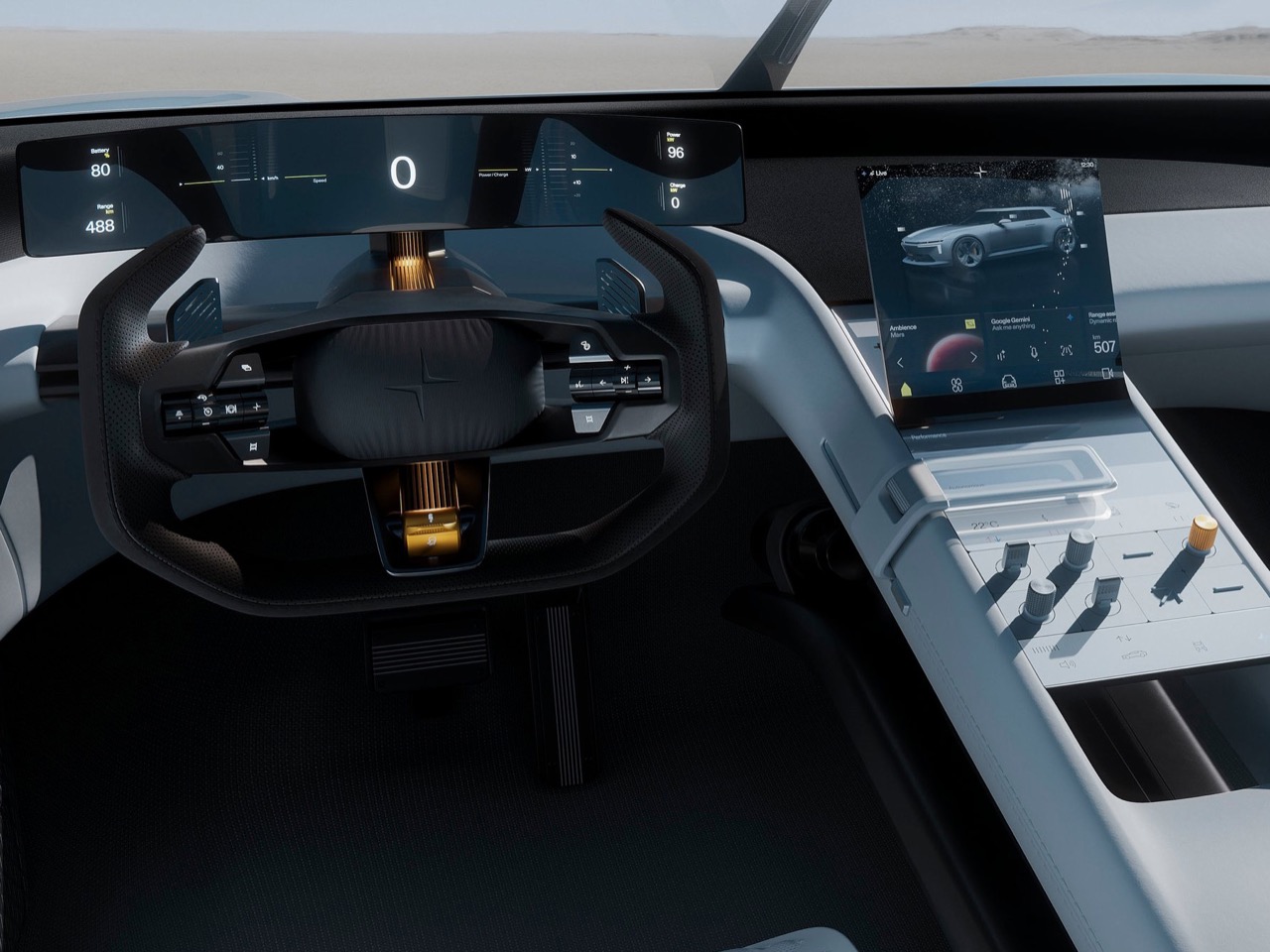
The driver faces the 20-inch HyperDIM, a curved display mounted directly on the steering column so it travels with the wheel. A 12.2-inch center screen rises out of a gently sloping center tunnel. You pick drive modes by sliding a selector forward through the console, and the cabin physically rearranges itself to match. In Autonomous, the center screen stands upright while the seat and steering wheel move away from each other, giving you room to lounge. Slide into Performance and the center screen sinks flush into the console as the wheel and HyperDIM pull toward your chest, which is about as close as an interior gets to rolling up its sleeves.
Below that center screen sits the panel that made me want to applaud: eight physical controls built on what Polestar calls a mechatronics solution. Owners can pick rocker switches or rotary controllers for each slot, then program individual hot keys for the functions they use most. Interior design chief Juan Pablo Bernal says the brand is rebalancing digital and physical in pursuit of a “tactile harmony.” The timing lines up with Euro NCAP, whose 2026 protocols reward physical controls for basics like indicators, hazards, and wipers, and Europe is where Polestar sells most of its cars. Google Gemini handles voice commands, so the screens keep the deep stuff while your fingers handle the everyday.
Nitrogen Paint, Swedish Gold, and the Polestar 2 Coming in 2027
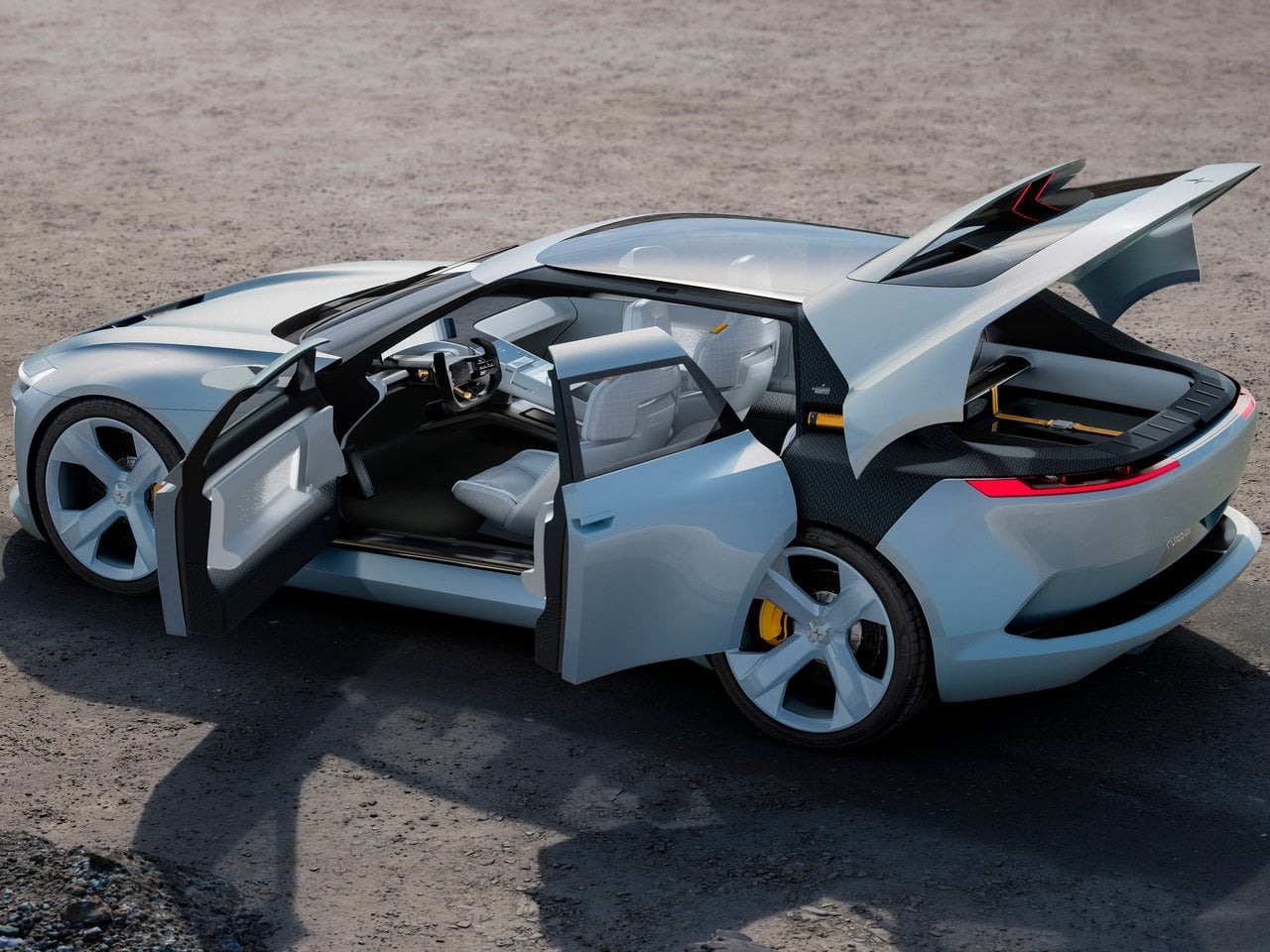
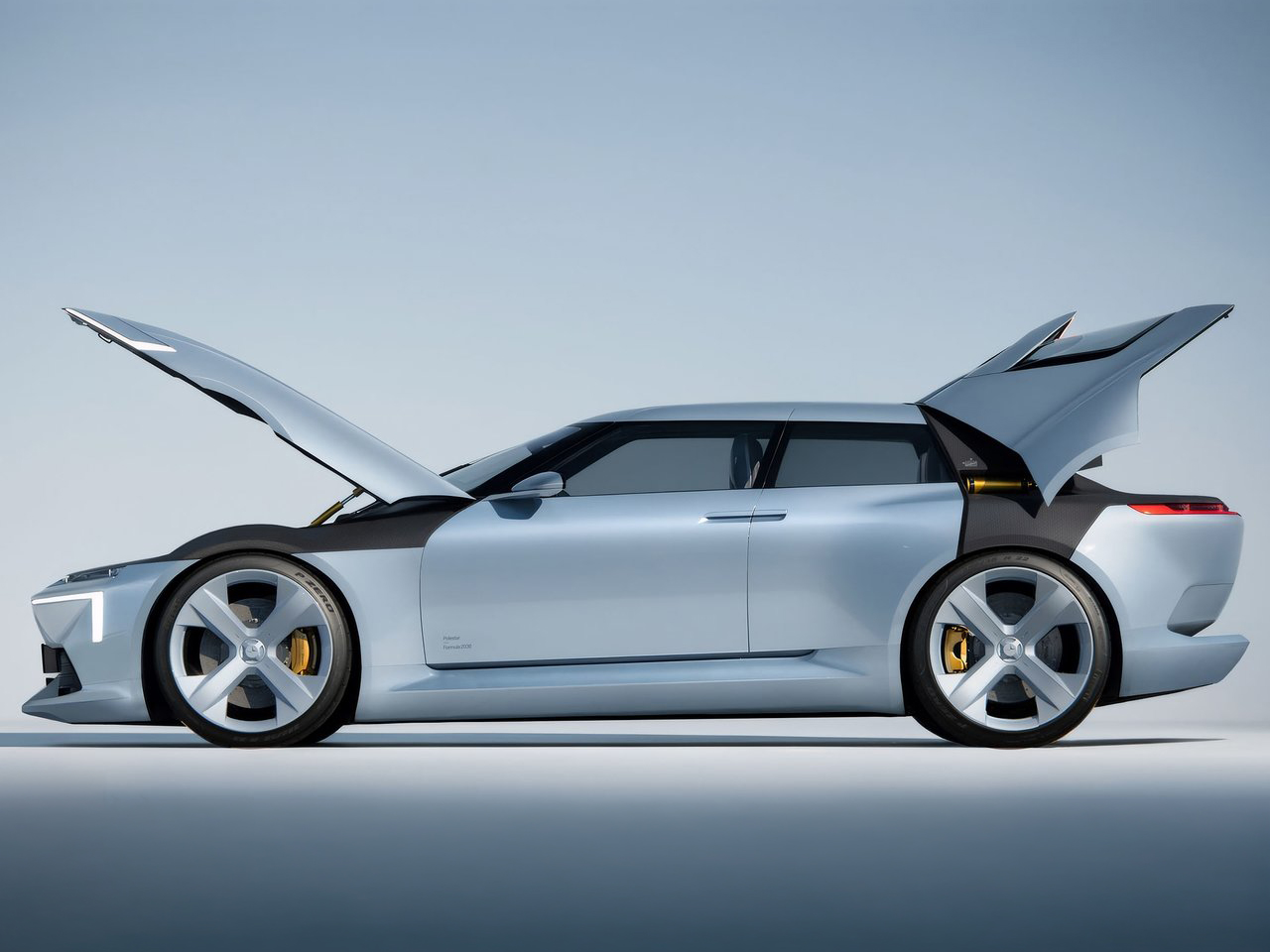
Nitrogen, the concept’s new exterior color, is designed to react to natural light and runs tone-on-tone across the body, side cladding, splitter, diffuser, and 22-inch center-lock four-spoke wheels. Gloss, matte, and satin finishes keep each part distinct, while Swedish Gold lands on the calipers, valve caps, seatbelts, and cabin trim. Structural parts inside, like the seat frames and cross-car beam, are made from low-emission galvanized steel and left exposed on purpose. The seat backs use European flax and bio-based polypropylene in a grid weave, colored after the fields the flax grows in. Bcomp’s natural-fiber composite shows up in the cargo area too, so the sustainability pitch is something you can literally see.
Polestar has confirmed that design elements from the Formula 2030 will reach the next Polestar 2 in 2027 and the Polestar 7 in 2028, with the 7 set to be built in Europe. The Dual Blade face is already earmarked for the new Polestar 2, and the Single Blade taillights are tagged for production too. Power, range, and pricing remain under wraps, so the concept’s job right now is setting the look and the cabin philosophy. Römers inherited a strong design language from Maximilian Missoni, and his first show car keeps that DNA while fixing the biggest gripe about modern EV cabins. If the Precept is any guide, a good chunk of this car will be sitting in European driveways soon.